OUR VALUE
Stainless BEP surface finish
Blind Electro Polishing
Stainless BEP surface finish
Surface features a highly fingerprint-resistant and high antimicrobial properties.
Stainless steel railings and handles are everywhere around us - in trains, offices, and homes. Have you ever hesitated to touch them because they are too dirty? In fact, many people feel that they do not want to touch hand railings stained with fingerprints.
BEP is a construction method that produces a clean surface based on electrolytic polishing, developed specifically for such stainless steel components.
- BEP Method is patented by us.
- Nominated in 19th Japan Stainless Steel Association Prize

EXAMPLES


FEATURES

Highly fingerprint-resistant and smooth texture
The usual application of electropolishing is to produce a glossy finish. But BEP treats the surface to create a pear-skin texture on stainless steel.
Fine irregularities on the surface cause light to scatter, making fingerprints less noticeable.
Compared to electrolytic polishing or buff polishing, makes smooth texture.
How we make fingerprints less noticeable
-
Smooth Surface(Buff Polish,etc...)

-
Fine irregularities on the surface
(Bep Method)
Anti-Corrosion is the greatest advantage of electrolytic polishing
The BEP method is one of the electrochemical polishing methods.
Characteristics of electrochemical polishing include the exposure of chromium to the surface. This leads to formation of oxide layer, thereby enhancing Anti-Corrosion.
After salt water test (Over 1000hours)
Left:HL Polishing Right:BEP Method



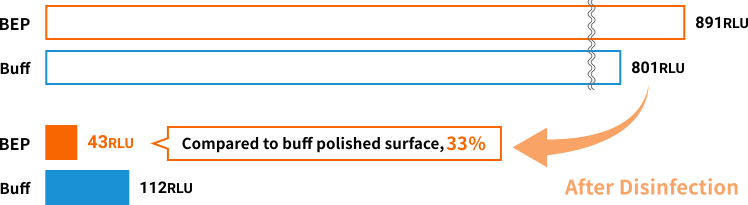
Achieves three times the antimicrobial performance of buff‑polished pipes.
Compare #400 buff polish, which is frequently used for handrail, and Bep Method.
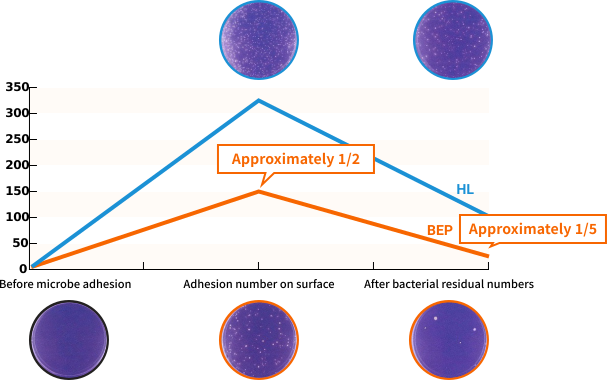
We conducted a wiping inspection which a major food company, Kikkoman Corporation, has recommend. After the wiping inspection, it resulted a reduction of residual bacteria to about 1/3 compared to the buffing face, demonstrating high cleaning efficiency.
How we make high washability possible
-

BEP Method Surface -

2B Surface -

Shotblast Surface -

Buff Polished Surface
The BEP Method appears similar to Blast Method when viewed with the naked eye, but upon inspection with SEM, it can be seen that BEP Method has a smaller surface area and is less likely for bacteria and viruses to enter the gaps.
Comparison of microbe adhesion numbers and bacterial residual numbers after wiping of the surface.
We examined the difference in the number of microorganisms remaining on the sample surface after attaching microorganisms to two types of stainless steel materials and wiping them off.